Why AI can’t replace a human marketer
Artificial intelligence has transformed the way marketing work gets done. Today’s tools can generate content, analyze data, suggest keywords, and automate repetitive tasks faster than ever before. Because of this efficiency, many businesses are asking an important question: can AI replace an entire marketing team and cut costs?
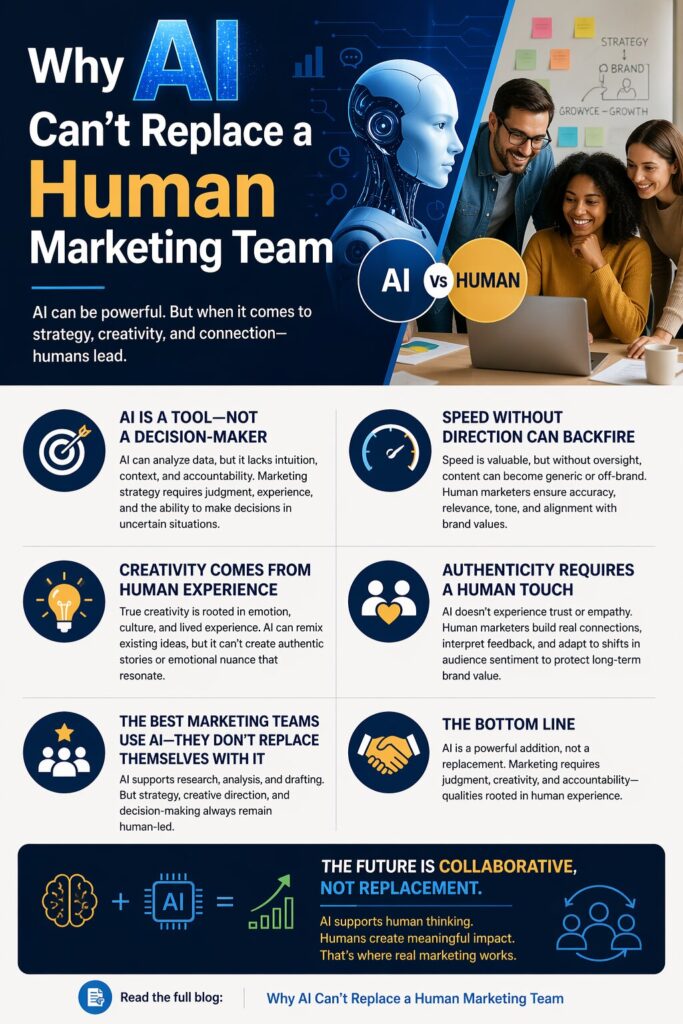
The reality is more nuanced. AI can significantly improve how marketing is executed, but it cannot replace the human thinking behind it. Strategy, creativity, and meaningful brand-building still rely on people.
AI Is a Tool—Not a Decision-Maker
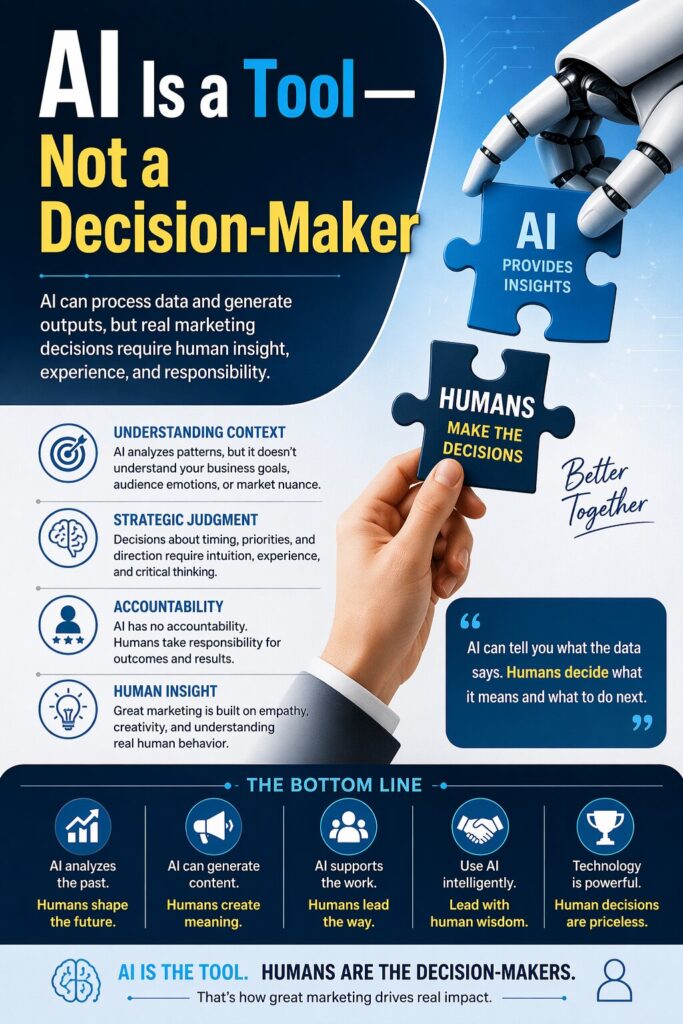
AI works by learning from existing data. It identifies patterns, predicts outcomes, and produces responses based on probability. What it lacks, however, is real understanding. It doesn’t have intuition, context, or responsibility.
Marketing strategy goes far beyond generating outputs. It involves interpreting business goals, understanding audience behavior, analyzing competitors, and making decisions in uncertain situations. AI can’t replace a human marketer Knowing when to change direction, what message to prioritize, or how to respond when campaigns underperform requires judgment shaped by experience. These are qualities AI doesn’t possess.
Without human guidance, AI-generated work often becomes reactive instead of purposeful. It may look polished, but it lacks depth and intent.
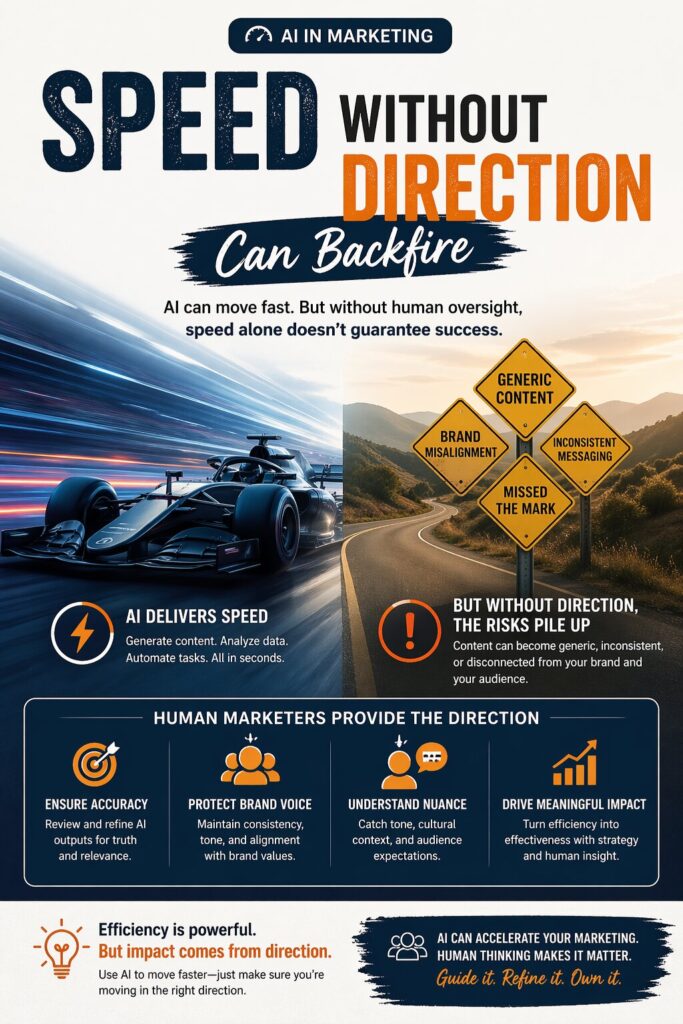
Speed Without Direction Can Backfire
One of AI’s biggest strengths is speed—but speed alone doesn’t guarantee quality. When content is produced rapidly without proper oversight, it can become generic, inconsistent, or disconnected from the brand’s voice.
Human marketers play a critical role in reviewing and refining AI outputs. They ensure that messaging is accurate, relevant, and aligned with the brand’s identity. They also catch nuances—like tone, cultural sensitivity, and audience expectations—that AI may overlook.
Efficiency is valuable, but without thoughtful direction, it rarely leads to meaningful impact.
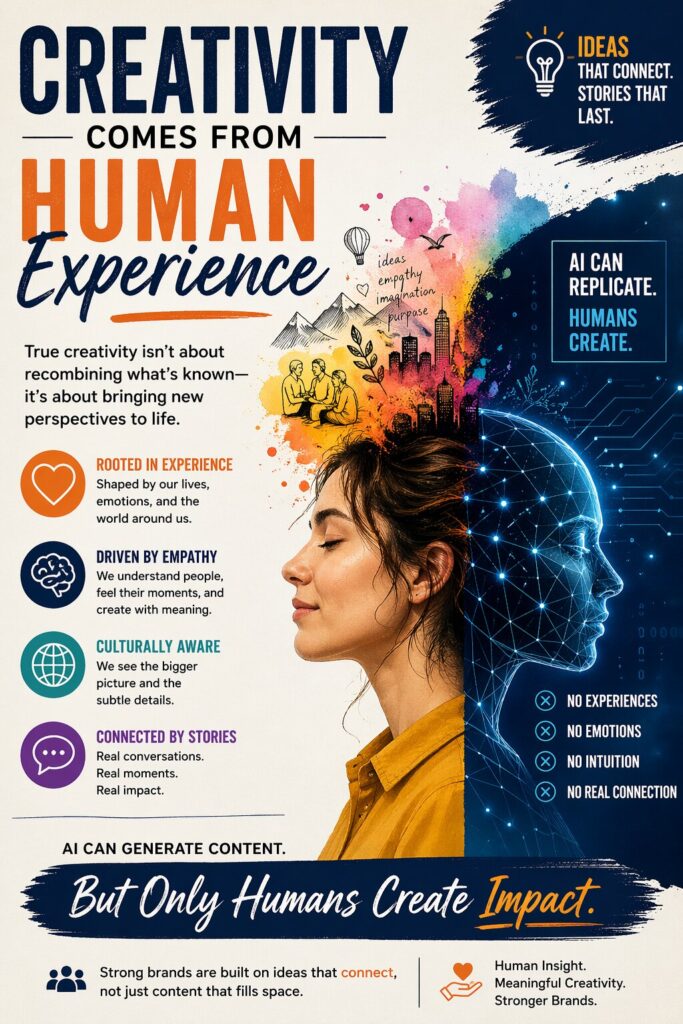
Creativity Comes From Human Experience
True creativity isn’t just about combining existing ideas—it’s about bringing new perspectives to life. It comes from personal experiences, emotions, cultural awareness, and the ability to see connections others might miss.
AI can remix what already exists, but it cannot create from genuine experience. It doesn’t feel curiosity, empathy, or humor in the way humans do. It cannot draw from real-life interactions or emotional insight to craft stories that resonate deeply.
That’s why AI-generated content often feels technically correct but lacks emotional depth. Strong brands are built on ideas that connect, not just content that fills space.
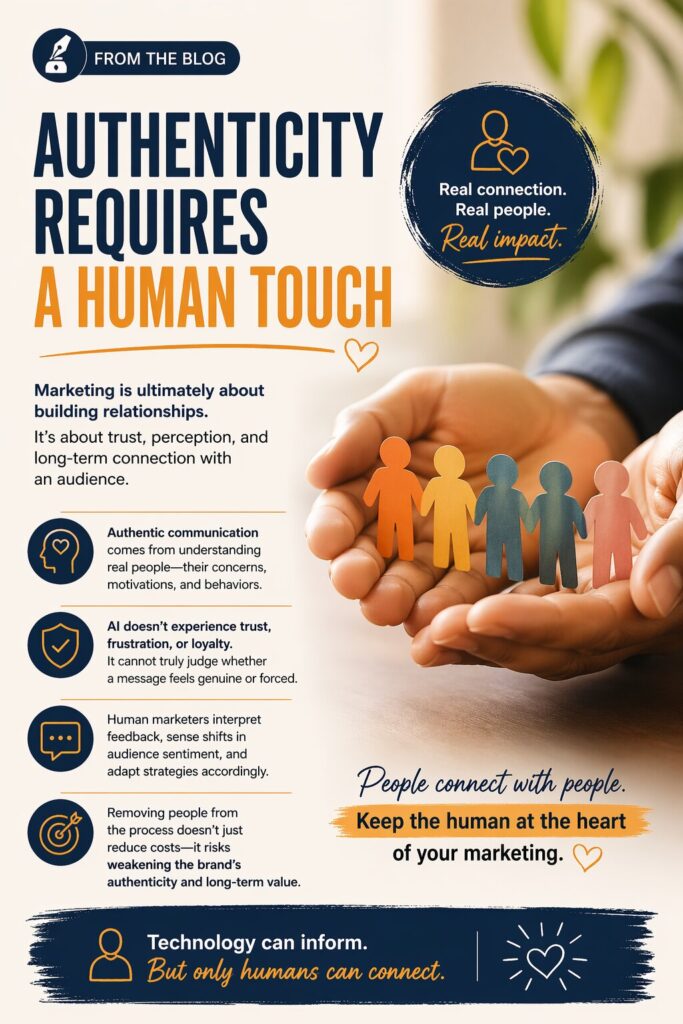
Authenticity Requires a Human Touch
Marketing is ultimately about building relationships. It’s about trust, perception, and long-term connection with an audience. Authentic communication comes from understanding real people—their concerns, motivations, and behaviors.
AI doesn’t experience trust, frustration, or loyalty. It cannot truly judge whether a message feels genuine or forced. Human marketers interpret feedback, sense shifts in audience sentiment, and adapt strategies accordingly.
Removing people from the process doesn’t just reduce costs—it risks weakening the brand’s authenticity and long-term value.
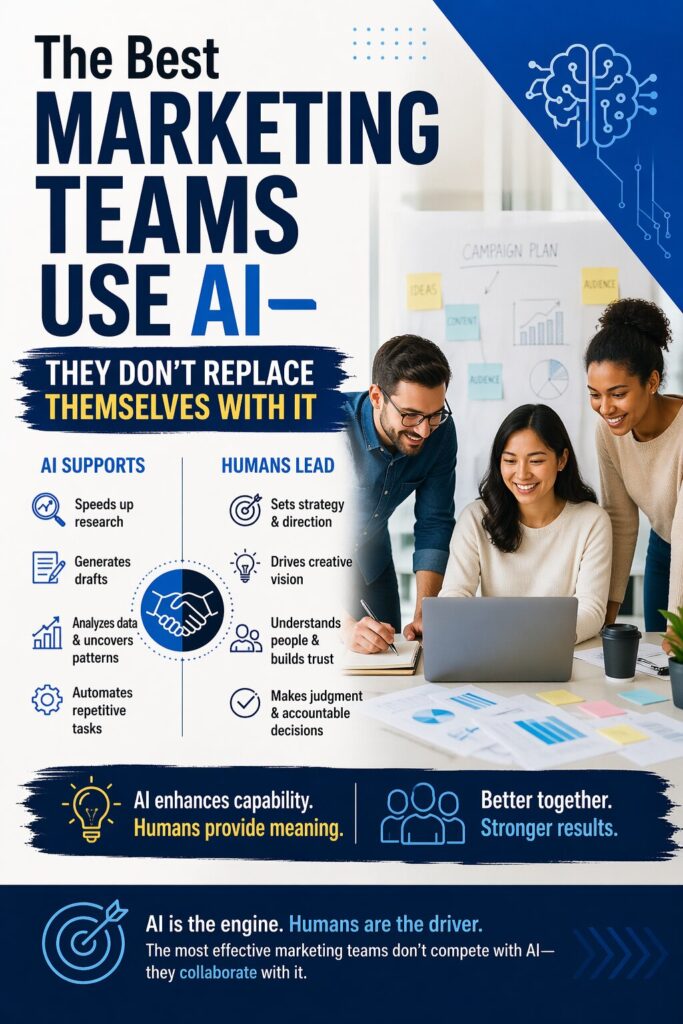
The Best Marketing Teams Use AI—They Don’t Replace Themselves With It
The most effective teams don’t see AI as competition. They see it as support.
Marketers use AI to speed up research, streamline analysis, generate initial drafts, and uncover patterns in data. But the responsibility for strategy, creative direction, and decision-making always remains with humans.
People decide what matters, what aligns with the brand, and what deserves further development. AI assists—but humans lead.
The Bottom Line
AI is a powerful addition to modern marketing, but it is not a substitute for human expertise. Marketing requires judgment, creativity, and accountability—qualities rooted in human experience.
Companies that rely entirely on AI often increase output but lose impact. The strongest results come from collaboration: human intelligence enhanced by technology.
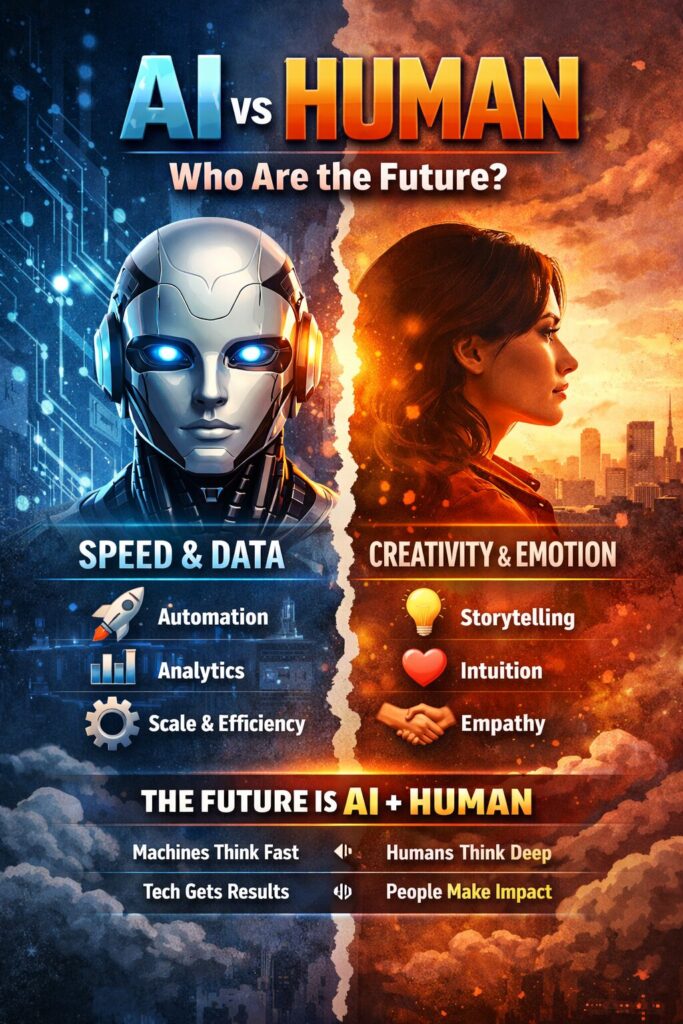
Marketing works best when AI supports human thinking—not when it tries to replace it.